Last week, we looked over another musical called "Chorus Line" as a warm up to the topic we were going to be introduced to for our next unit however we were finalised with having a new musical to focus on.
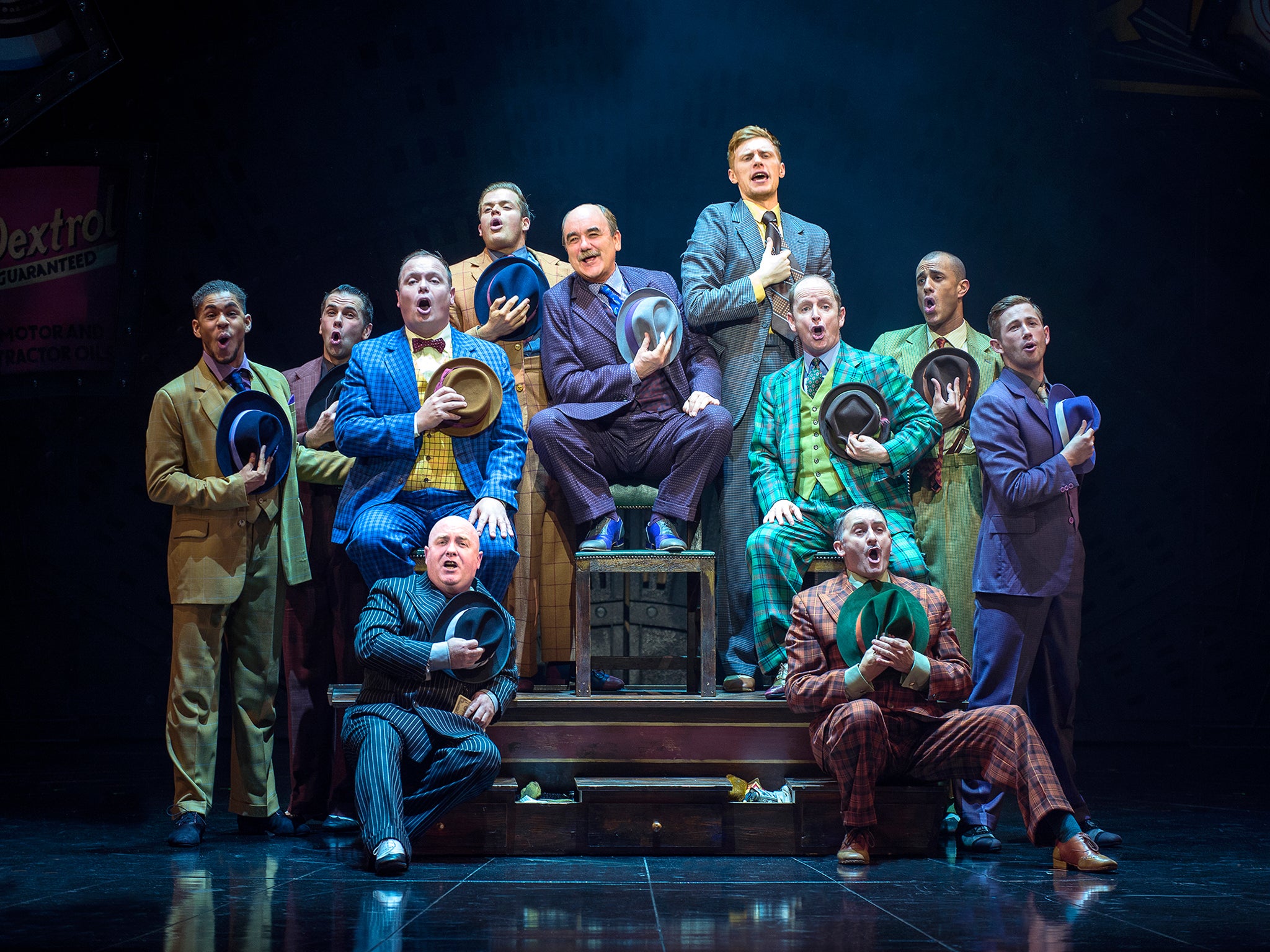
In this session and we looked over the musical 'Guys and Dolls'. The song we went over was, "Sit Down, you're rocking the boat" where it's about a gambler who has a dream about him entering the afterlife, and his journey throughout the dream. From a religious view or any idea of what happens to people after the die, there's the river of souls and a Grim Reaper will guide you on a boat to purgatory. The lyrics helped us with the idea and gave us a clear understanding how to stage this. We were directed to have chairs to represent the boat and allowing the movements to flow into one of the other.
What went well about this choreography was the actions that we were directed to do. Most of the movements were in unison and allowed us to connect with each other as well as the music. I personally thought for the beginning of this new choreography, I did really well with picking up the moves and allowing to try new things compared to how I did in the first unit I did.
I think what I need to improve on next session would be my footwork and for me to exaggerate my movements bigger and better. For example: as I was in the front row, my character needed to be expressed more to catch the audiences attention. I was directed to spread my fingers when throwing my arms in the air next time.
This term, we are looking over the musical Cats and just the pilot of the play, that would introduce each character and what they are. We focused on the ensemble section which was the chorus first. Personally, the melody was catchy however the diction of repeating Jellicle cats were difficult and I would sound like I'm mumbling the words instead of dropping my jaw and using my diaphragm to allow the words to come out. I soon learned to emphasise on the 'j' to make it sound punchy and sinister to show the character side of things.
In these other sessions, we focused on different sections with Jellicles song and how we shape it better. As I was singing the alto line within the whole number, various times we would work on the harmonies of different sections of the song. One section would be spaced that girls would have and it would seem like a call and response between the boys and girls.
What went well was that we sounded as one with the harmonies and it fit through pretty well. For example: singing the section with the starting line 'the mystical divinity...', the harmonies were on point and was clear enough to hear each section sing out. Personally, that section was my favourite part to sing as a whole cast.
The area of improvement would be the focus of the class and getting most work covered, we have a tendency to losing focus after doing a piece of work. My goal for next week would be to get as much work done and learn different things along the way.
This was our last rehearsal for Jellicle cats and we wanted to make sure the singing and movement flowed into one another and rehearsed like never before. There's no more improvement to be done until the performance so we tried to make it as perfect as possible. We did our normal routine warming up of tongue exercise and breathing exercise to allow the diaphragm to work and strengthen.
Whilst we were doing the movement, we would have to sing out and at first it was a struggle. We were out of breathe after huge movements and made us sound unprofessional and messy onstage. We were directed to keep breathing through movement so when singing, you find breaths within spaces of the song so the words doesn't sound "breathy". At point, I would do small movements to retract from being out of breathe however that didn't work. I took on the direction and this allowed me to power through the whole show. This was a massive improvement for me physically and vocally as it allowed me to help me breathe through, also allows me to progress within my health.
In this session, we focused on a song from the musical "Guys and Dolls" called Sit down you're rocking the boat and began to choreograph it piece by piece. We looked at the staging and how we would have the idea of a boat to signify the context of the song. We placed chairs in the shape of a boat where we were all able to move and have space to do any big movements.
What went well with this choreography was the pace of the movement and how quickly I could pick up the movement. For example, when I did the in sync movement with everyone else, I was able to do it. I was able to exaggerate the first movement by making it sharp with a bright smile and huge gestures.
The areas of improvement would be footwork within the piece; when I did the heel chick, it was hard to do the next movement which was making a box with my feet and I would get my foot placed in the wrong area or cross my legs. I went over the move over and over until I got it right. I started off slowly and gradually started speeding up however I found this transition hard to do.
Maimuna's Class (Cats)
In this session, we focused on expanding on the "Jellicle Cats" dance and stylise is to make it more flexible and lose like a feline. This was very helpful as it allowed us to be able to connect with the style and the character of each individual.
I think what went well was how on time with the music we were with the music and how angelic we performed as feline characters. Improvements would be being able to sing and dance at the same time. Another would be working as a collective and being able to communicate as characters. For example; We should look at each other more or focus on our spacing as cats. Next time, I would like to make things tighter and more movement more sharp so when we can focus on the singing more.
Today's session was a very heavy session whereas we did a lot of practical stuff. We looked over the historical context between songs and how musical theatre was incorporated into it.
Jazz:
As we know, jazz was originated from the African Americans, it was during the time of slavery. Throughout the composition and style changed over time and was used within different areas of music- Blues, Swing, Latin jazz, Ragtime Musical Theatre was grown around jazz. We looked over one of the famous jazz artist named Stevie Wonder
From the context that we learnt about jazz, we began learning songs which incorporates the style of musical theatre. The song we went over was called "They can't take that away from me". This song was a 1937 hit jazz song as the music was by George Gershwin and lyrics were written by Ira Gershwin. The song was introduced within a musical called "Shall we dance". The song is about a person singing a memories of a person they loved and all the little habits they had to signify them. George Gershwin was an American composer and pianoist who did both classical and pop music.
Gershwin studied piano under Charles Hambitzer and composition with Rubin Goldmark, Henry Cowell, and Joseph Brody. He began his career as a song plugger but soon started composing Broadway theater works alongside his brother, Ira Gershwin, and Buddy DeSylva. He then moved to Paris intending to study with Nadia Boulanger, but she refused him; he subsequently composed "An American in Paris". He then returned to New York City and wrote "Porgy and Bess" with Ira and DuBose Heyward. It was initially a commercial failure but came to be considered one of the most important American operas of the twentieth century and an American cultural classic.
As a class, we took line by line to learn this as an ensemble first until we were familiar with the melody and lyrics until we got the flow of it.
Jellicle Cats:
In the second session, we went over Jellicle Cats as an ensemble and work on section we may needed to improve on. What went well was for the first try, we sang as a unite, we sang our harmonies in the place that we needed to place them and they fit within each other like puzzle pieces.
This helped me improve myself and my understanding of the piece of music and allowed myself to build on my harmonies and sustain them.
As an individual, I believe I portrayed my very best within the whole performance and showed areas where I could improve and overcome for future performances. For each performance, I expressed a certain way for each of the characters I played. For example, when I portrayed the character in the 'Guys and Dolls' choreography, it differs from where I had to portray an angelical cat character to relate with the context. Even thought the transitions for each show was rapid, I had to keep changing my mind-set of how I could approach the audience differently.
As an ensemble, the performance was a success as we worked as a collective and kept our sustained roles within it. We worked as a unit and encouraged each other to express our potential. Within each small performance, we connected and knew what we were doing. For example, within the 'Jellicle cats' performance, we took a note that we should know who we are singing too and how we must sing to each other. We did this by engaging with each other with physical contact and eye contact when singing the song- this would include the opportunity for us to act out and exaggerate our characters. Overall, we cooperated onstage and throughout our show even though have minor areas to improve on, it was a success.
I think the issues and difficulties, I would point out as both an individual and a collective, would be how we would rehearse before the show; I believe that the dress and tech was rushed as it was only hours before the show. For example, during the performance, you may see that as a collective, we were tired as we kept repeating parts minutes before the show. I would take it on a part that, we may have organised the rehearsals a week before to get the understanding of how the show would run smoothly. Other than that area of improvement, I would also point out how we, as a cast, worked together and how we communicated with each other. In my opinion, I would say that many individuals have strong opinions as well as how we portray those opinions where we don't always agree on terms and becomes a lost communication within each other, as performers. Another difficulty we faced was the fact how our class was split up in different dance groups and were uncertain on how to we would collaborate as a whole. We were left to merge the two choreography's the same week as the performance, as well as on the performance, which I found was very unorganised and would've been dealt in an alternative way.
I believe my relevant contribution for the entire show were mainly having solos as I took that commitment and practised over and over to make it better each time. The solo in the 'Gershwin Songs', I went over the lyrics which was appointed to me and tried different ways to approach it with different ranges within my voice. One example would be, that the melody of my line is quite high and need a lot of breathe to maintain; at first, I was trying to change into my head voice but that was putting too much pressure on my vocal cord in my throat. I then decided to try and belt the words out as well as remember to use diction by using my diaphragm to push the air through, so my voice could project more. I believe this was helpful as it showed me steps I could improve myself if I ever come across to this again within singing.
I believe the feedback, I received both as an individual and as an ensemble were understandable as they were crucial to my performance and how I could shape something better, how I can allow to do something even more exaggerated to catch the audiences breath. On the other hand, there weren't ideal directions I would agree to and didn't believe would've flown into either the choreography as well as the music within separated classes. For example: with the Gershwin songs, we were directed to sing line by line in each song as the boys sing one song and the girls sing the other. This didn't exactly work as the melody was different and the pace of both songs didn't match as one had a rapid tempo with swing as the other one was a ballad with a romantic bounce. For Jellicle cats choreography, we as a group had to finalise the piece within the last section of our chorus and some movements were either too complex for many individuals or the movement didn't exactly flowed with the music, which made altercations and alternative routes. For the positives, an example of a direction that helped was when we were rehearsing Jellicle cats as a whole cast and we had to sing to each other and communicate like we were real cats expressing who we were to the audience. This direction was very helpful as it made it seem believable and easier within the context of musical theatre.
I think I was disciplined within lessons as I would be prepared for class, have the right equipment ready and have the mentality that a rehearsal is in progress. Within Jellicle Cats rehearsal, I would have my ring binder with my music sheets ready and sometimes wouldn't need it as I would be off book- however, throughout the week, it helped me improve slowly. Another discipline action that took place would be within dance, I would come to rehearsals early or on time to go over the movement or have another student play the songs we need to practise and sing.
One thing I would say from this experience that it's very very hardworking and mustn't taken lightly. I've learnt as a musical theatre performer, I would definitely have to be fit to breathe whilst singing and dancing. I would like to point out that during both the rehearsal process and performance, I was enormously out of breath as I couldn't control my breath properly. I realised that my breathing wasn't balanced and how very unfit I was. It allowed my voice to disappear and made me look unprofessional as well as made the piece untidy. The struggle I face within all these challenges was maintaining projection and breathing whilst singing; physically would be the footwork as I would get a section in the Guys and Dolls wrong after the heel click, as the moved were quite rapid and on tempo. However for all this struggles, I gradually overcame them by constant practise and always asking to go over movement and music with others.
I would say my targets for improvement would be:
Be fit
Stop procrastinating
Take work within rehearsals if it's sheet music or a routine
Within class, I should take leadership and not be timid
These targets are what I believe I should be shaped in as a person as well as an musical theatre artist. The way I would achieve these goals would allow myself to come out of my comfort zone and blend in, take ownership of how I manage my work as well as my mental health. Being fit will definitely help me as it's healthy for both the body and the mind.
During my time at the gallery, I had the feeling that I’ve
been here before and I realised that I had. I’ve been here for a previous event
with my secondary school which had an impact due to the fact that I’ve never
been inside, only performed outside. Before I entered the gallery, the building
looks like a house or a school from the outside. I believe that the gallery
looked quite prestige and not like any other galleries.
In comparison, my opinion for the inside had change from the
outside as it was more comforting as well as being at peace with the artefacts
I saw. The themes each artist portrayed were related to the 20th century as many were very colourful as well as quite exotic. My experience within another gallery was quite similar as well as different. The previous gallery/ museum was the V&A as I did a performance as well as explored the different types of art. Similarly this gallery and the V&A share a connection with the styles and vintage uses of how materials and architecture, I would also say the target audience are for both galleries would be for families and younger explorers as majority of there pieces are with interactions with questionnaires on Ipads about different objects. The difference between the galleries are the style; V&A has a modern day entrance before toy go in and it's built up brand new with marble flooring whilst this gallery is quite old fashioned and kept the same approach it would have within the 20th century. Here are some of the artefacts I came across which I thought stood out for me and what I thought had the 20th century atmosphere towards it:
On Wednesday 13th February, my group and I performed our show in front of an audience. In my opinion, we did this successfully however there were areas where improvements needed to happen within the rehearsal process.
Rehearsal Process:
As an individual, I tried to focus on the lines as well as my physicality. A disadvantage to this, my energy was more focused on the lines that my actions when doing the scene I divided the lines into pauses if they were like a list of words and thought about how I should say the sentence. Projection, pace and clarity were my main weaknesses during practise. As my character was quite big and boisterous, the energy and effort of my voice work needed to improve. I practise using my diaphragm to allow the sound to travel however, I couldn't push my voice further. What went well for me are my reactions and facial expressions within scenes to other people, which also allowed the audience to point out the relationship, I as a character, would be with others. For example: Cynthia and Mrs Noah has a vague relationship that's based off of class and hypocrisy; the subtext is, Mrs Noah tries her best to impress Cynthia as she comes from a wealthy family and has a high status within society.
Within the rehearsal process of this play, we did work through scenes as a collective. We did have scripts to prompt us throughout the scenes as most of them had huge paragraphs for individual characters. We practised in big spaces as well as the staged area and used a proscenium arch as our staging form as it would be more easier for the audience to see everything happen onstage. Technical Run:
We did the technical run an hour before our showing in front of an audience. I would say that we would've rehearsed with the technician beforehand however, we focused on making the scenes perfect that lighting and sound never really occurred at the time. On the other hand, we included a wide range of technical background for our show to run smoothly and it correlated with our scenes. For example; with the opening scene, we organised the spotlight on Noah to show intimacy as well as allow the audience to see he's the main priority throughout the scene. Transitions were very easy as every scene ended, there were a blackout to start a new scene. Sound was very useful within the piece, especially when we needed to highlight certain sections to make sense to the audience, for example, while the whole ensemble was onstage, we all had umbrellas to represent the angels looking down at us, we used the sound scape of thunder and raindrops to create that effect on the audience.
Overall Performance:
Our performance went better than expected, the transitions went well, the pace of the transitions went very well, the reactions and energy in majority of the show.
As an individual, my strengths within each scene were visible however looking back at the recording, I could've thing differently. The cake scene and the tea party scene had pointers where I could've done better and shown more of my character within her true form. I believe with the opening scene, when my character shouts "Noah!", it resonated with Mrs Noah's persona and the audience would quickly see the relationship between the two characters.
What went well within the Cake scene were:
Reactions were good with each other when others delivered a line
Facial expression when Cynthia mines cake gesture as it was quite effective
Use of voice were effective as I used a range of dynamics as well had voice breaks
The built up anger I had was seen when I was listing and delivering my lines.
Areas of improvement would be:
I was using too much of my hands within every word I said
Projection for majority could've helped
Being more demanding when listing the cake so the audience can automatically realise my status
Pace was too fast in moments that some of the lines got lost within it
Diction was also a priority I needed to make as my words didn't make sense
As Mrs Noah, I needed to exaggerate the character more with the whole body rather than using the voice alone
What went well within the Tea party scene:
Staging had a good portion due to the amount of people onstage
My use of voice when I delivered lines suited the situation
Facial expression were in effect whilst looking out in the audience
Areas of improvement would be:
Projection needed to push more
Diction again and pitch as it sounded like it was going high then low with majority of the words
Within this scene, my reaction were quite slow and make it look awkward onstage
When delivering the huge paragraphed line, I should've slowed down and take my time
As a result, I believe the feedback we got as a collected from the audience are very effective and the areas I need to focus on when doing script work as it needs more work, physically and vocally.
Lion is based on a true story about a young 5 year old boy,
named Saroo, who was accidentally separated by his family in India. He was found
and put into care and an Australian family adopted him. After 25 years later,
he went on searching for his hometown using Google maps and found his mum later
on. The director of this movie is named Garth Davis. The adaption of Sarro’s autobiography
and book, “A long way home”, Davis has really created so many emotions and
intensity by using this story for the watchers to reflect on what a person can
go through.
My views on the movie allowed me to understand the concept of the world and the insight to what many people go through. Davis really highlight the experience the struggle and emotion between Young Saroo and Adult Saroo, it allows the watcher to experience both emotion of Saroo's journey.
Previously, as a class, we were split up and did a trust exercise that we all experience. The experience had required a moment when we felt sad, angry or frightened within a situation and whether we were comfortable to express that. I believe that this session was very necessary as it allowed to understand individuals and why they are shaped the way they are.
I gained a lot of confidence and trust within the group as allowing, not only one person, but a group of people know a place were you felt vulnerable is quite scary and puts a heavy amount of stress on the mind as well as how people would treat you afterwards, however my group was very supportive and encouraged me that it's okay to open up to them. When others began to open up their experience, it was understandable and very emotional within the session. The atmosphere was so intense because people allowed themselves to talk about very personal deep moments or situations that they went through. It also made me reflect on how I talk to people because of the impact with how things are in others lives.
The word empathy explains how you would feel towards a person and the ability to connect with people, within this exercise empathy was shared widely around the group. Empathy is a very powerful connection between people and be an advantage to when acting a play towards an audience, it could build a connection between the character and the audience member. This is also very valuable within voice as it allows emotion to become easier when put on spot.
Guys
and Dolls is a musical based in the 1920’s whereas gambler
Nathan Detroit has few options for the location of his big and illegal craps
game. Needing $1,000 to pay a garage owner to host the game, Nathan bets
another main character named, Sky Masterson that Sky cannot get virtuous Sarah
Brown out on a date. Despite some resistance, Sky negotiates a date with her in
exchange for bringing people into her mission. Meanwhile, Nathan's long-time fiancée, Adelaide, wants him to go legit
and marry her. It
highlights a lot of religious use within the play.
The musical context behind "Sit down, you're rocking the boat":
Sit
down, you’re rocking the boat is sung by a character called Nicely Nicely
Johnson and expands the idea of him having a dream he had on his way to either
heaven or hell. The
boat highlights the journey through the pool of souls going to hell. This
song especially shows a massive part within the show as the it explores the
idea of being saved and forgiven for their crimes. Here's the song we are focusing on in dance class and the choreography:
I believe the suitable staging form would be "Proscenium Arch" staging as it would help with a lot of exits and entrances with the different characters. It would also be helpful as there isn't too much intensity within the audience and doesn't break the forth wall too much. I propose this type of staging would benefit the style of the play as it almost is within the split staging between scenes. My original idea was to perform on a Thrust staging however, I thought about the disadvantages the side audience would have as well as the actors exits and entrances.
Costume:
Red opulent clothing for the rich to represent power and a sinister twist to each of the character. It would also highlight an idea of poisonous within society and that everyone should beware of them. My idea of the costume design would be the context what I've read within the script itself. Although Nothing on Earth doesn't have any time period nor literal style of what characters would wear, I did look over the theme of Capitalism vs Socialism and the biblical knowledge of Noah and the Ark, I shaped the idea of old context and 1800's style.
Sound:
Early British music, Noah would have a subtle peaceful victory sound effect compared to the rest of his family would have an eerie climaxed setting. For example; when Mrs Noah enters onstage in the opening scene, I would use a dark and "rumbling" underscore to create that intensity for the audience to realise how powerful and controlling Mrs Noah is, every time she came onstage or when an intensity begin. In comparison to Noah, I would have a light melody to symbolise hope within the show as he's the main protagonist who isn't an evil spirit.
Props: The props I would use within one scene would be teacups to highlight the theme of a "posh" era as well as highlight the British "culture" whereas tea was a very expensive within the 1800s as it has a lot of historical context behind it.
Health and Safety:
Health and safety within the technical run is not as complex as you would imagine, however working around technical work can be dangerous. There's hazards where people may trip over, dark areas when onstage which makes you quite confused on where you're going, due to the theatre lights. In other words, to avoid all of this the technical team call this a call and response to ensure people on and offstage to be aware of their actions and surroundings.
If a show is being performed within a tech or dress rehearsal, and a blackout or fade is schedule, the phase "Going dark" is being said by one of the performance, it would be allow the technician to know that cue and as a response to that action, the performer would say "Thank you dark".
When using scaffolding/MEWP (Mobile Elevating Working Platform) it would be said ,"Going up" and "coming down"- all people in the space should move away from this area immediately on both calls to avoid things being dropped onto them.
Another key phase would be "HEADS"- This is when something from the rig/higher platform has or is about to drop or be dropped. Everyone on and offstage should be away from the working area but this still gives you a chance to avoid any dangers.
Finally, there's something named "Call times" which means-"Thank you 30", "Thank you 15", "Thank you 5" and "Thank you beginners"- This is all referring to you beginners call. Each number meaning how much time left until you have to make your way to your beginners positions. In other words, how the scene started.
Music Director: A music director manages the actors and the production, they are the main people to give direction on how the show/event must be presented onstage. Directors has the key role of choosing the cast members who sings what part, the style of the production design and creative aspect within the whole project.
Music Producer:A music producer is in charge of financial businesses, they hire the choreographer, music director, the composers to make up the whole crew to work around the production.
Choreographer: A choreographer is a person who creates abstract dance moves within any genre which fits within the music as well as the context of the production. For example: Cats is based on real life cats and the dance needs is based around jazz and ballet as cats are very flexible and easy to move your body.
Make up and Costume Designer:A make up and costume designer work within how the actors look to make the performance seem realistic. They're responsible for
Light and Sound Technician:A light and sound technician controls and helps set the atmosphere of the
Well Being within vocal practise:
Hydration:
Drink a lot of warm honey and lemon tea to sooth your vocal muscles as well as room temperature as it allows the voice to come out smoothly without the muscle straining. Diet: The diet within singing would be healthy food and no dairy products. The reason for no dairy is because the thickness of the dairy product will clog up your vocal airways and prevent your glands from opening. Use of muscles:
The main muscle would be your diaphragm as it allows the sound to travel and breathing within singing as well as taking deep breaths strengthens the muscle to hold out long notes and belt higher notes. Vocal exercise:
Here's some video's or me vocally warming up:
In this session, we focused on the topic of objectives and units within the lesson. Objectives include what the characters purpose and aim within the scenes, as units talk about the breakdown of scenes or parts of the scenes. For example; my object for Mrs Noah in the cake scene was to be over the top and leave a good impression. The units helped break down the scene into section where the mood would change or shift and sustain that reaction throughout.
Individually, we drew gingerbread men which represent the inside as emotion that their characters have within them and the outside is how they represent it towards everyone. This is also called the "Stanislavski system". We also looked at the practitioner name Stanislavski who focus on the naturalistic plays; for example, all the plays except Nothing on Earth is naturalistic as it's realistic and familiar to real life situations.
What went well within this task was how I broke up the scenes as mood changes and find the objective within the scene. Areas of improvement would be giving it more energy as well as understand the character more as I need to act more controlling and possessive with everything as well as be above everyone. My main struggle would be to learn my script so I can be more open to the physicality of the character- another thing would be how I would react to things as it's a melodrama and non-naturalistic.
This term, we are focusing on musicals as a unit and are looking at the musical Cats. Cats are based on a book by T.S. Eliot as it was composed by Andrew Lloyd Webber. The musical portrays a tribe of cats called Jellicles; by night, they make what is known as "The Jellicle choice" which allows cats to ascend to the Heaviside Layer and come back to a new life. Hence why cats have 9 lives.
In this session today, we began to learn a new song and split the harmonies into vocal ranges; my vocal range would be alto as well as soprano however, I decided to go with alto within my comfort zone.
What went well was I picked up the melody quite easily when I got the sheet music and was able to understand what I was reading and follow it with the accompany. Areas of improvement would be diction within the words and pronunciation of the word "Jellicles" within the pace of the song.
Within this term, we are focusing on the unit of musicals and the experience of musicals itself across the whole course.
We began looking at shows and was decided to do "Chorus Line" as a starter. We learnt a routine which was aspects from a video of the choreograph as well as improvised- majority of the dance moves were sections of ballet, jazz and physical theatre. This helped widen my knowledge of different dance types as well the limits I could push within my comfort zone.
What went well within these dance sessions, I was able to practise nonstop and understand each move step by step. I was able to add my own "sass" to make it quite my own and how I could play with it. Areas I may need to improve on would be my pace with the music, I would miss moves and would forget what comes straight afterwards as I wouldn't be use to the speed. I would also mess up my my correlation of my left and right and what way to go so the transition or travel isn't hard. One last evaluation would be being more balanced within the routine, as I'm trying to keep up with the music, the results and balance for majority of the moves aren't neat.
These are different types of stages within theatre.
Proscenium Arch: The metaphorical vertical space in a theatre, usually surrounded on the top and sides (whether or not truly "arched") and on the bottom by the stage floor itself, which serves as the frame into which the audience observes taking place upon the stage during a theatrical performance.
Advantages:
Allows to break the fourth wall
Space for orchestral pit
Always have to face the audience as well have them back
Wings for cast members
Disadvantages:
Engaging with audience is forced
Intensity is complicated and hard as you can't create a relationship with the audience
Actors doesn't always have the audiences eye line
Thrust Stage: This type of stage is extended into the auditorium so that the audience can be seated around 3 sides of the stage. Thrust is quite familiar with Proscenium Arch however aspects of this stage is different. For example; this has more of an intensity with the audience and the audience.
Advantage:
Acting can be more naturalistic due to having your back turned
Creates an intense atmosphere
Easy to block
Help actors feel immersed
Disadvantage:
Actors have limited exits and entrances
Can be seen from a 3D angle
Ensemble numbers may be difficult due to minimal space
Movement can be artificial for the actors as they keep moving to ensure they don’t have their back
to the audience for a long period of time
In the round: This type of stage is when the audience are in a circular seated position around the stage. Sometimes, the stage is lifted to make the audience see the event properly.
Advantages:
The audience feel included within the performance as it creates a intense and exciting atmosphere
Tactical experience with light and set
Foreshadow close to audience
Acting more naturalistic due to having to turn your back in large extension
Disadvantage:
Sight lines can be very tricky
No wings as such, limited exits and entrances for actors
Limitation of set design and props
More naturalistic lighting needed
Any set changes have to happen in front of the audience
Traverse: This type of stage allows the audience to face each other on either side whilst the event is being performed. This is also known as a "corridor" or "Alley" stage. Many fashion shows use this type of stage.
Advantages:
Creates an intense atmosphere
Projection can be easy
Unique experience for each side of the audience
Disadvantages:
Audience may feel intimidated
Audience may be distracted by each other on either side